
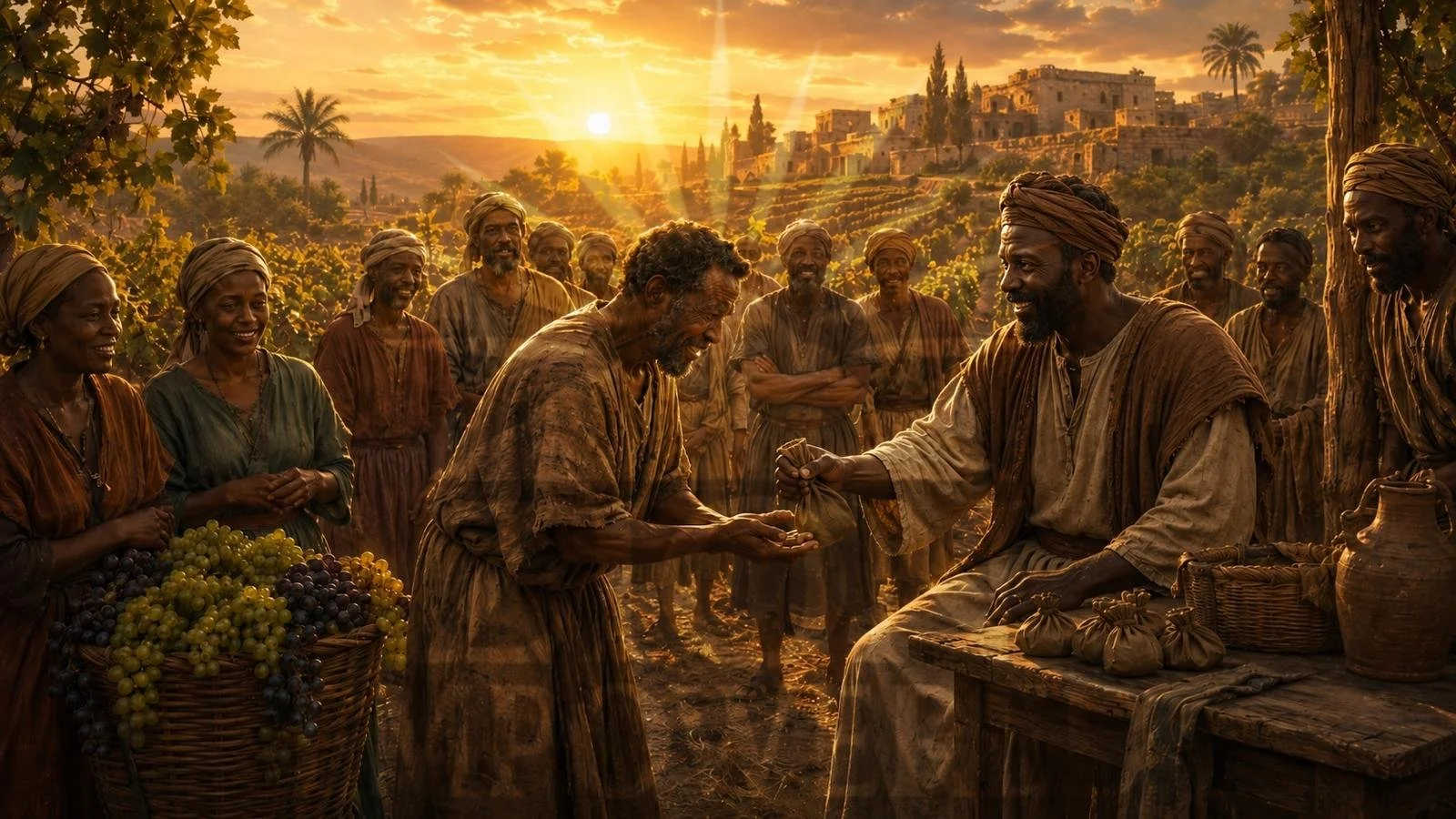
The Last Worker and the Corner of the Field
Opening Preamble
The Last Worker and the Corner of the Field
Before Jesus takes us into the vineyard, Scripture first takes us into the harvest field.
The lesson does not begin with an argument about pay. It begins with grain, worship, memory, and a command: when the harvest comes in, do not eat first. Remember first.
Leviticus tells Israel to bring the first bundle before the Lord. Lift it. Consecrate it. Count the days. Mark the season. Remember that the land was gift before it was labor, that the rain fell before the sickle swung, and that the seed carried mystery before the hand carried harvest.
Because the human heart is a strange thing. Let the field get full enough, and we start rewriting the story. We start acting as if blessing began with our effort, as if the field owes everything to our sweat and nothing to the mercy that woke us up able to work it.
But the sacred text will not let the harvest become arrogant.
Just when the worship feels finished, after the offering, after the counting, after the holy rhythm, God turns our eyes from the altar to the edge.
Do not harvest all the way to the corner.
Do not pick up every dropped piece.
Do not clean the field so well that the poor have nothing left.
Leave something for the poor.
Leave something for the stranger.
That is the holy interruption.
Worship is not complete when the offering is lifted. Worship is tested by what remains for somebody else. The field is not holy merely because grain came out of it. The field is holy when mercy is left in it.
Then Matthew brings us to a vineyard.
There are workers hired early, at nine, at noon, at three, and then there are workers still standing at five o’clock. Not because they refused the field. Their own words tell the truth:
“Because no one hired us.”
That sentence ought to slow us down.
We live in a time when people are quick to name somebody lazy, quick to question somebody’s worth, quick to build a whole story from half a fact. We know how to turn suspicion into speech. We know how to dress resentment up like discernment.
The old teachers called that danger lashon hara; harmful speech, words that may carry a piece of truth but do not carry love, justice, or necessity. Beside it stands the evil eye; not superstition, but a resentful way of seeing. An eye that looks at another person’s mercy and feels robbed.
That is what happens in the vineyard.
The first workers are not cheated. They receive what was promised. But when the last workers receive enough to live, the first workers become offended. Their problem is not injustice. Their problem is goodness given to somebody they ranked beneath themselves.
They saw hours.
The landowner saw households.
They saw “only one hour.”
The landowner saw somebody going home with bread.
And that is where the Gospel gets under our skin.
Some of us love grace when it rescues us. We question it when it feeds somebody we think came too late, worked too little, suffered too softly, or stood too long outside the field.
But the Kingdom does not run on scarcity, comparison, the evil eye, the loose tongue, or the small arithmetic of wounded pride.
The Kingdom runs on the goodness of the Landowner.
So Leviticus says: leave the edge.
Matthew says: do not resent the last worker.
The biblical witness says: the poor and the stranger must find bread in the field.
Jesus says: the one nobody hired still has a place in the vineyard.
And the question before us is not only:
What did we bring to God?
The question is also:
Who can still eat after we are done gathering?
Who did we judge before we understood their waiting?
And can our eyes be healed enough to rejoice when grace finds somebody else too?
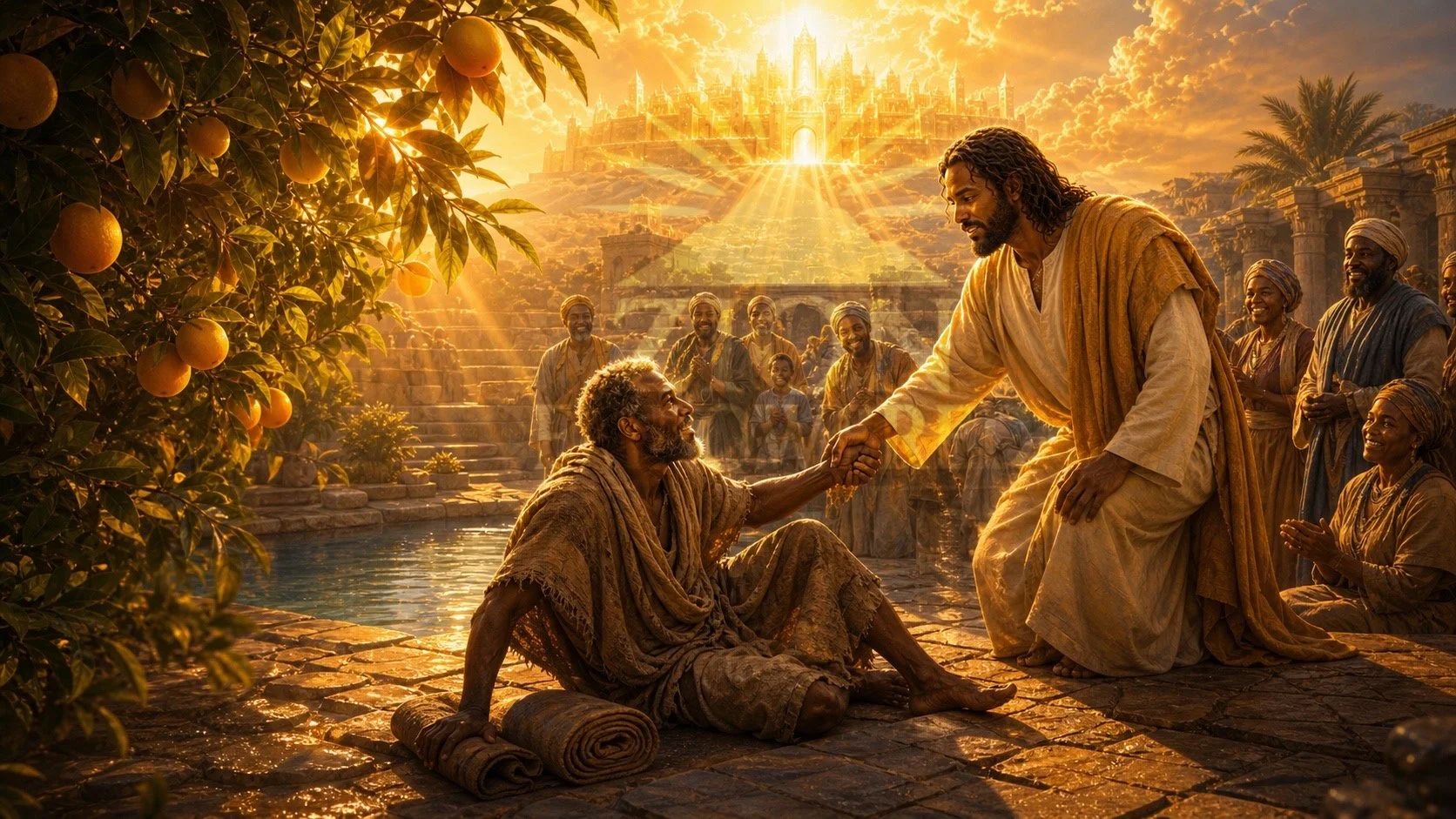
The Father Is Still Working
Opening Preamble
Before Jesus tells a wounded man to pick up his mat,
Torah teaches Israel not to pick fruit too soon.
Before the man at the pool learns how to walk,
the people in the land must learn how to wait.
Before John shows us healing on the Sabbath,
Leviticus shows us fruit that must become holy before it becomes useful.
Because God does not only heal bodies.
God orders appetites.
God does not only give increase.
God teaches restraint.
God does not only say, “Rise.”
He also says, “Wait.”
Kedoshim means holy ones.
It is spoken to the whole community:
parents and children, workers and neighbors, farmers and strangers, elders and the poor at the edge of the field.
Holiness is not a private glow.
It is public order.
It is how we handle fruit, hunger, time, mercy, anger, and the person we would rather not see.
And tucked inside this holiness chapter is a quiet command:
When you enter the land and plant a tree,
do not eat its fruit for three years.
In the fourth year, let the fruit be holy.
Let it become praise.
In the fifth year, then you may eat freely.
That is a strange word to hurried people.
We live in a world that says:
If it grows, grab it.
If it opens, enter it.
If it shines, chase it.
If it feels good, claim it.
But Torah says:
Not yet.
Not because the fruit is evil.
Not because God is cruel.
But because some blessings must pass through praise before they pass through appetite.
Some fruit is real, but it is not ready.
Then John brings us to a man who has been lying beside a pool too long.
Jesus sees him.
Jesus speaks to him.
Jesus commands him:
Stand up.
Pick up your mat.
Walk.
And immediately the man is healed.
But the miracle happens on the Sabbath,
and the argument begins.
Not over the man’s restored body.
Not over the mercy standing in front of them.
Not over the long years he spent lying down.
The argument begins over the mat.
They noticed what he carried
before they celebrated that he could walk.
That is where the text starts telling on us.
Because Jonah could pity a plant and resent a city. And here, religious eyes can notice a mat and miss a man.
The danger is ancient, but it is still alive:
we can love order more than restoration,
rules more than people,
and our own comfort more than God’s compassion.
Leviticus says:
Do not consume the fruit too soon.
John says:
Do not reduce the miracle to the mat.
Leviticus teaches holiness before possession.
John teaches holiness after healing.
The fruit must become praise.
The healing must become a walk.
And Jesus seals the whole matter with one sentence:
“My Father is always working, and so am I.”
So this Sunday, we stand between a tree and a mat.
The tree asks:
Can you wait before you consume?
The mat asks:
Can you walk after you are healed?
The Sabbath asks:
Can you recognize the Father’s work when mercy does not fit your schedule?
And holiness is learning how to live faithfully between all three.

Citizens of Heaven, Neighbors on Earth
Preamble:
Before God sends His people into the city,
He teaches them how to live before His presence.
Before Jeremiah tells the exiles to build houses in Babylon,
Torah teaches Aaron how not to rush into the Holy Place.
Before Peter calls the church “living stones,”
he first tells them to put away deceit, hypocrisy, jealousy, and unkind speech.
Because God does not build a holy people with an unhealed spirit.
Acharei Mot means “after the death.”
It is a word spoken after rupture.
After Aaron’s sons died.
After sacred space was violated.
After worship became careless.
After nearness to God was treated too lightly.
And Jeremiah 29 is also an after-the-death word.
After Jerusalem was broken.
After the people were carried away.
After the old world collapsed.
After the faithful found themselves living in a place they did not choose.
And into that place, God does not say,
“Disappear.”
He does not say,
“Dwindle.”
He does not say,
“Become bitter ghosts in Babylon.”
He says:
Build.
Plant.
Marry.
Multiply.
Seek the peace of the city.
Pray for it.
Then Peter comes along and says:
You are living stones.
You are a spiritual house.
You are a holy priesthood.
You are God’s own people.
Now live honorably among your neighbors.
So this Sunday, we stand between two addresses.
One address is heaven.
That is where our citizenship is.
The other address is earth.
That is where our neighbors are.
And holiness is learning how to live faithfully between the two.
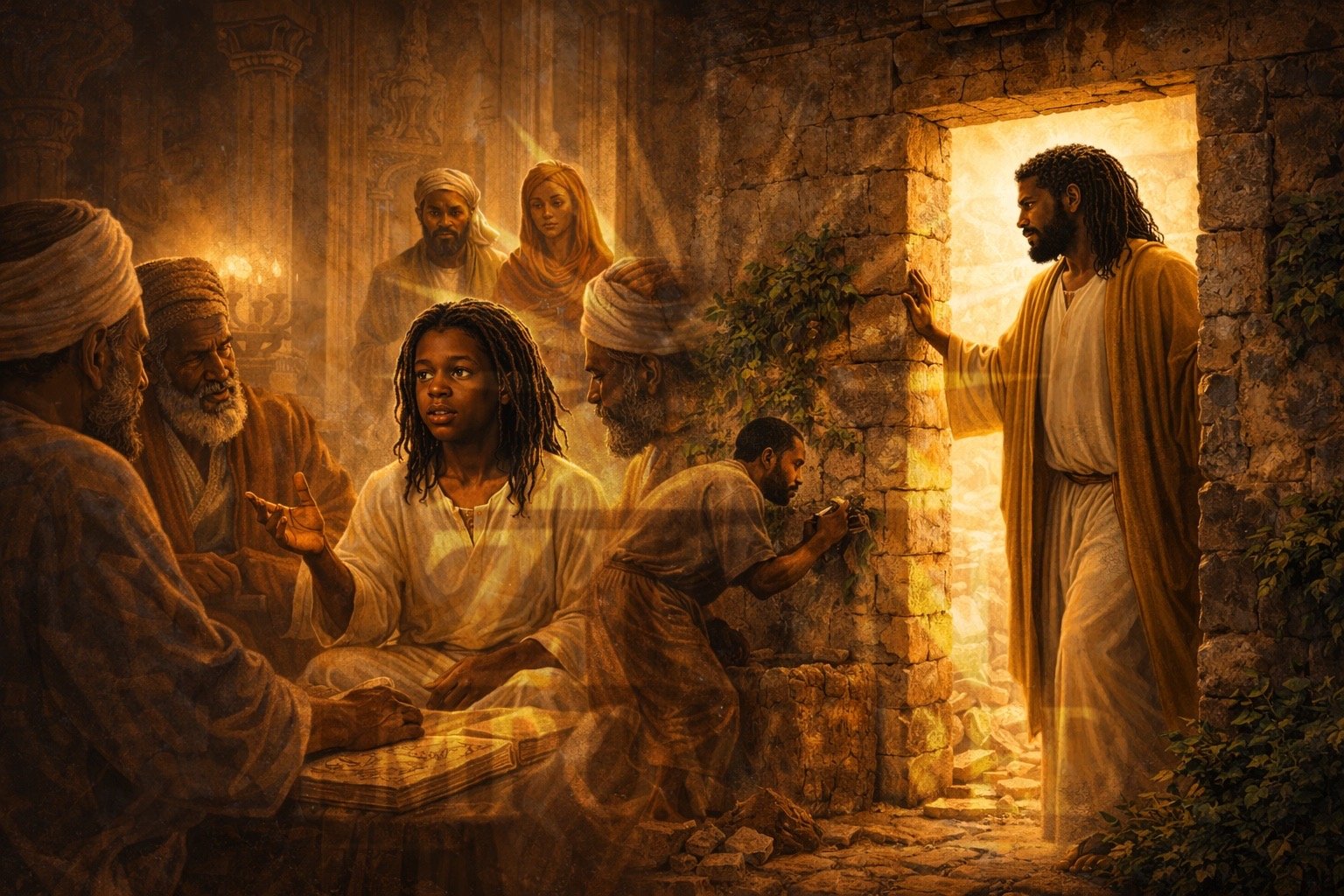
When God Checks the House
Preamble:
Before Jesus speaks of His Father’s house, Leviticus speaks of a house under examination. Before Luke shows us a child growing in wisdom, Leviticus shows us walls that must be inspected. Before favor is named, something hidden must be faced.
That is a severe mercy for an age like ours. We know how to occupy houses, decorate houses, defend houses, market houses, and boast about houses, but we do not always know how to examine them. We know how to measure attendance, protect appearances, preserve programs, and keep the machinery moving. We know how to ask whether the room is full, whether the money is steady, whether the sound is right, whether the public face remains intact.
Scripture asks a more dangerous question:
what is living in the walls?
What has settled beneath the plaster?
What has spread in the dark while respectable people kept calling the structure sound? And what is this house quietly shaping in the souls of those who live inside it?
That question does not stop at the church door. It reaches into homes, neighborhoods, cities, and nations that speak of strength while trembling underneath. We are living in a time when leaders promise security and peoples inherit anxiety, when the language of peace is often spoken over fractures that have never truly been healed, when the world is learning again that silence is not the same as reconciliation and restraint is not yet wholeness. A house may look calm from the street and still be carrying trouble in the walls. A people may speak proudly of order and still be living with fear just beneath the paint.
So the Spirit places these two witnesses beside each other. In Leviticus, a house is emptied, inspected, shut up, scraped, and repaired. In Luke, Jesus is found in the Temple, listening, asking, answering, and naming the place where He must be. One text shows a house being tested. The other shows what a true house of God is meant to produce: wisdom, obedience, reverence, and favor. One text deals with what must be uncovered. The other reveals what holiness can raise up when a house is rightly ordered.
So the question before us is not only, Are we in the house? The question is,
What kind of house have we become?
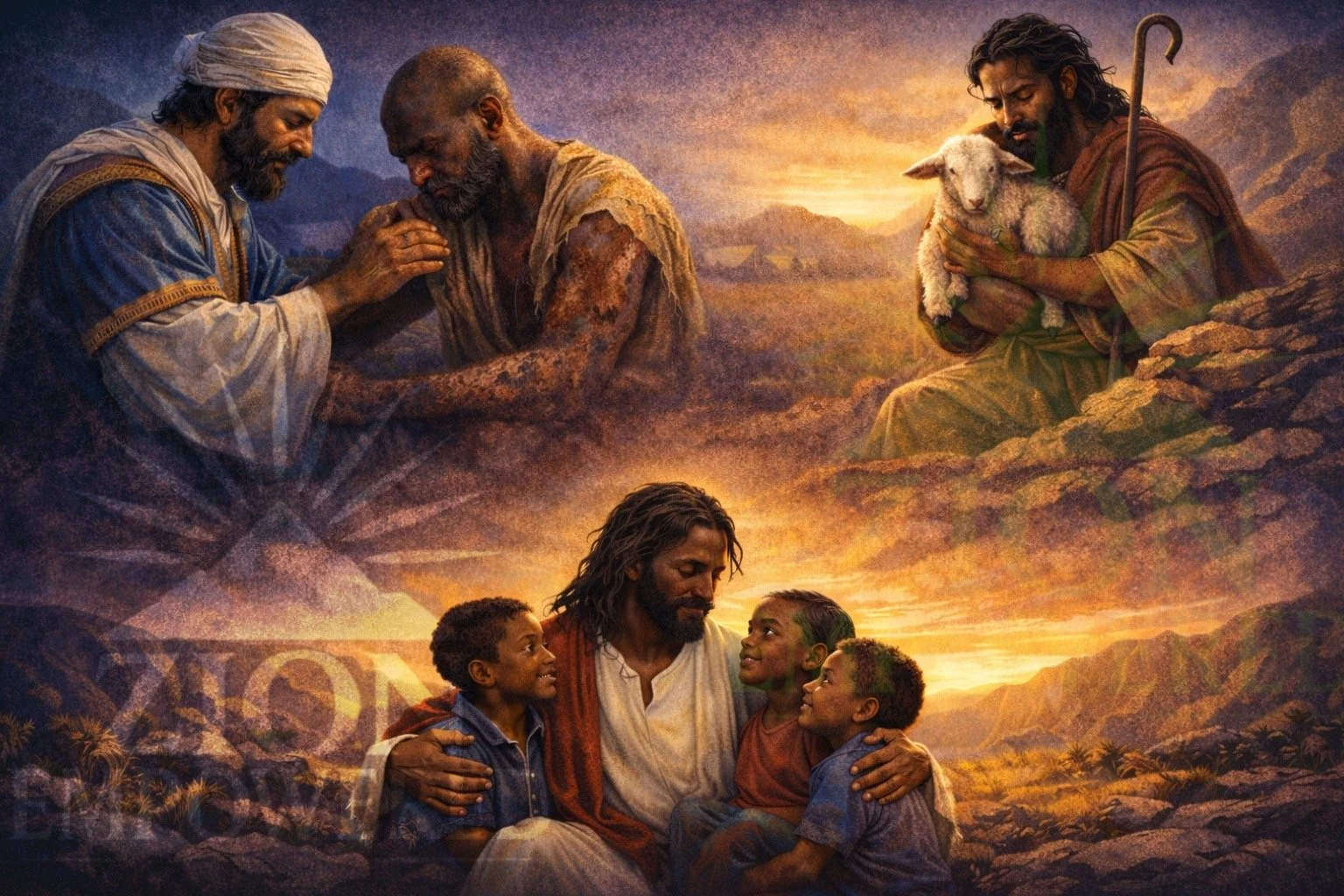
Don’t Despise What God Is Trying to Restore
Preamble:
Before Jesus says,
“Do not despise the little ones,”
God teaches His people
how to see.
Before the shepherd goes after the one sheep,
the priest stands over a wound
and learns the difference
between what is healing,
what is hidden,
and what is still alive in corruption.
That is a needed word.
Because we live in an age
quick to expose
and slow to restore,
quick to label
and slow to discern.
But Scripture is doing more here
than talking about skin.
It is teaching a holy people
not to confuse softness with mercy
or harshness with holiness.
Not every mark means the same thing.
Not every wound is equally dangerous.
And not everything brought into the light
is meant to be cast away.
So when Jesus says,
“Do not despise the little ones,”
He is not ending discernment.
He is forbidding contempt.
Holiness must learn to see rightly.
Mercy must learn to tell the truth.
And the house of God
must not confuse exposure
with rejection.

From the Deep to the Victory
Preamble:
Before Paul shouts victory over death,
Jonah prays from the deep.
Before the church says,
“Death is swallowed up in victory,”
a prophet says,
“I cried out… and You heard me.”
That is how Scripture teaches us to see Easter.
Not first as decoration.
Not first as a holiday.
But as God’s answer
to the place where life felt shut in,
buried, cornered, and finished.
We live in a world skilled at announcing endings.
Broken things are called finished.
Buried hopes are called foolish.
Exhausted people are told to adjust to despair.
But the gospel does not begin with adjustment.
It begins with interruption.
God interrupts death.
God interrupts the deep.
God interrupts the sentence
that human eyes thought was already settled.
And that word belongs in the church,
especially in a people’s church,
because we know what it means
to live under verdicts that were too early,
labels that were too small,
and graves dug by more than dirt.
So Easter morning comes to say:
the deep is real,
the pain is real,
the burial is real,
but none of them are sovereign.
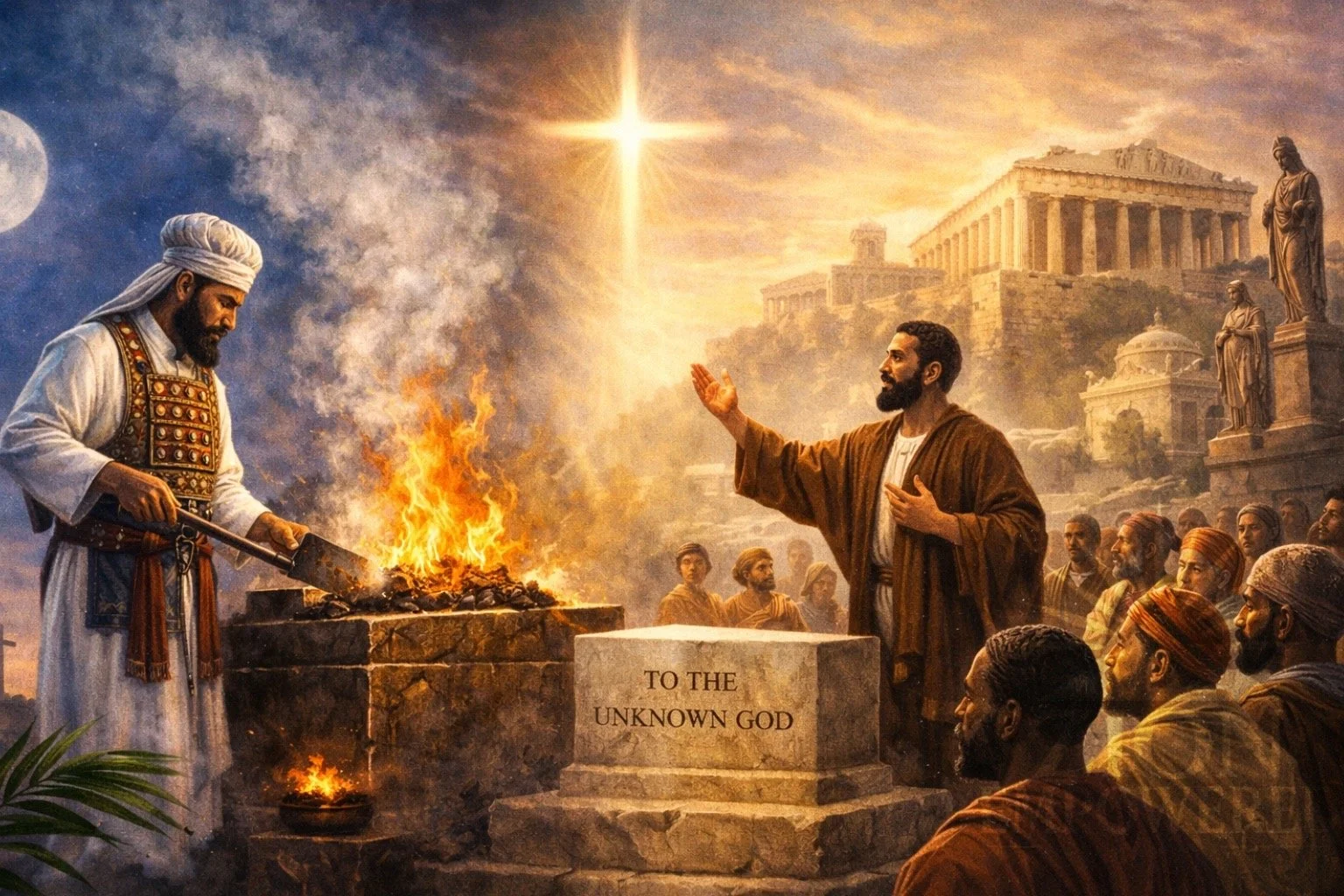
Near to All, Holy Among Us
Preamble:
Before Paul stands among the altars of Athens,
the priest stands before the altar of Israel.
Before the nations hear
that God does not dwell in temples made with hands,
Israel is taught
how to rise,
how to handle yesterday’s ashes,
and how to keep the fire from going out in the night.
That word meets us in an age
that loves saying God is everywhere,
but does not always love
the discipline of living
as if He truly is.
Acts gives us the wide word.
God needs nothing.
He is not served as though He lacked.
He gives life, breath, and all things.
That is hard on proud religion.
It means God is not fragile.
He is not waiting on us
to keep heaven running.
He is God already.
But Leviticus gives us the close word.
The fire must not go out.
The priest must tend it.
The morning must begin again with care.
Ashes must be handled.
What was offered yesterday
must not be treated lightly today.
So this is not a contradiction.
It is a schooling.
God does not need the fire.
We need the fire.
We need it
so nearness does not become carelessness,
so worship does not become noise,
so we do not learn how to shout on Sunday
and forget how to bow by Monday.
The altar was never built
to contain God.
It was given
to shape a people.
And that is why this word leans toward Palm Sunday.
It is possible to wave branches
and still have no inward fire
for the obedience that comes after the parade.
So the question before us
is not simply whether God is near.
The question is whether we have become
the kind of people
who know how to live near Him.
For the God who cannot be housed by temples
still means to dwell among a people.
And He will be known
not by noise alone,
but by a people who know how to rise,
how to remember,
how to carry the ashes,
and how to keep the fire.
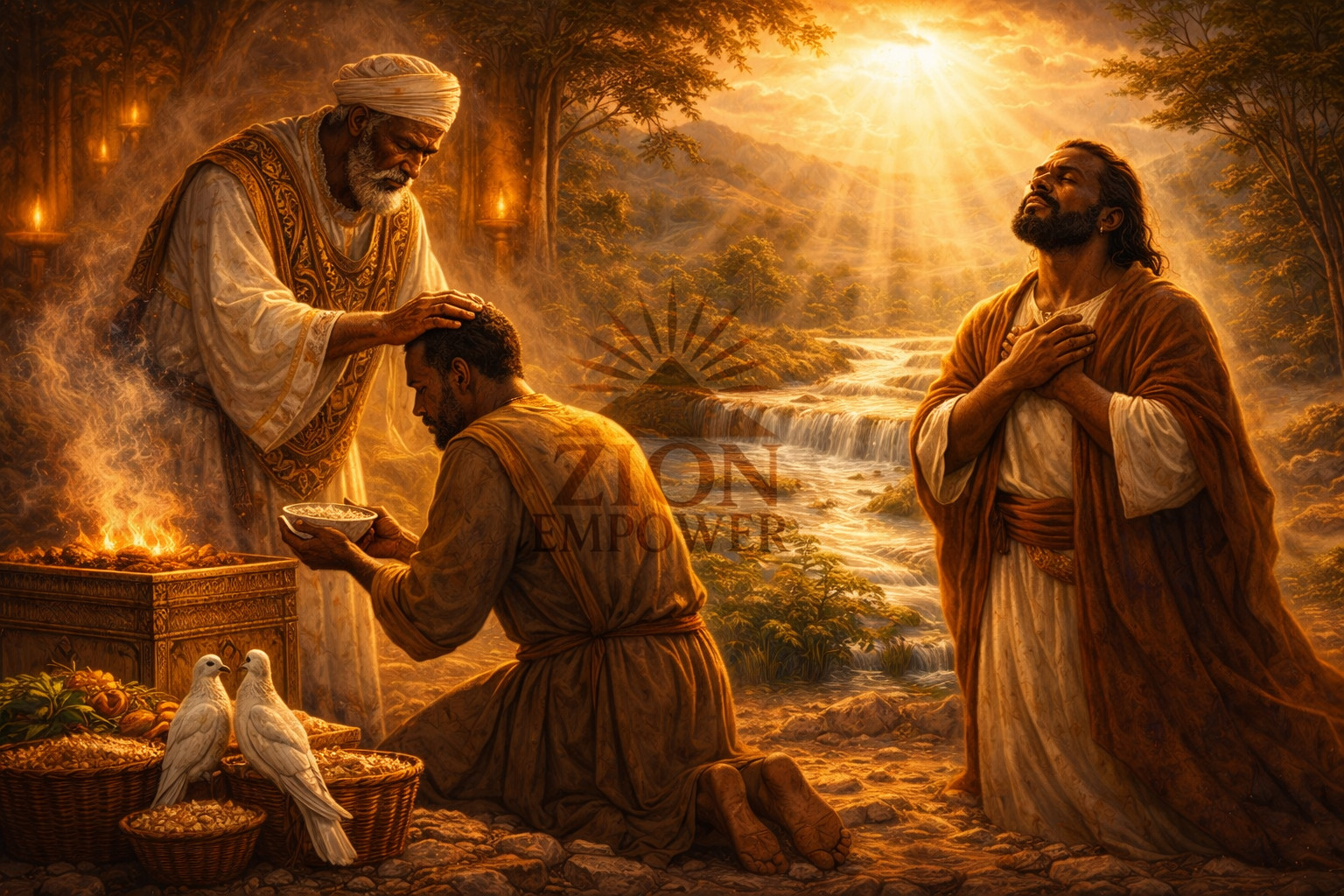
When Mercy Makes a Way Back
Preamble: Before Leviticus teaches what to bring,
Isaiah reminds us who we were meant to be.
Not just a people with offerings in our hands,
but praise in our mouths
and truth in our hearts.
For the danger of religion is not only rebellion.
It is routine without return,
sacrifice without surrender,
worship talk covering a heart that has stopped calling on God.
We have learned how to look near Him
while staying guarded at the center.
But Scripture is not fooled by spiritual polish.
You can wear your Sunday best and still have your soul in hiding.
God says,
“This people I formed for Myself.”
That is purpose.
“You have burdened Me with your sins.”
That is rupture.
“I erase your transgressions for My sake.”
That is mercy.
And then:
“This one shall say, I am the Lord’s.”
That is restoration.
Leviticus does not interrupt that word.
It gives it feet.
It gives confession a mouth,
mercy a road,
and the guilty somewhere to go besides hiding.
That is why this text already leans toward Easter.
Because before there is resurrection joy,
there must be truth,
there must be return,
and there must be a God who can raise what shame laid down.
The wonder of this week is not only that sin is named.
The wonder is that God still makes a way back
for the people He formed.

Love That Builds the House
Preamble: Before the Tabernacle was finished,
the people had to decide what kind of people they would become.
Not what kind of structure they admired,
but what kind of heart could bear holy nearness.
Before John speaks of perfect love,
Torah speaks of stirred hearts.
Before fear is cast out,
the hand must learn to open.
That word meets us in a restless age,
loud with alarm and thin in reverence,
quick to sharpen suspicion,
slow to deepen mercy,
rich in reaction,
poor in presence.
Scripture will not let us confuse agitation with love.
Love is not sentiment.
Not slogan.
Not polished religion
laid over an anxious soul.
Love is holy force.
It begins in God,
passes through the heart,
reaches into the hand,
and takes form in the life of a people.
John gives us the mystery:
God is love.
Love did not begin in our reaching,
but in God’s movement toward us.
The Son is sent.
The Spirit is given.
The Invisible becomes known
where love becomes visible among the visible.
Exodus gives us the earthly witness:
a people so inwardly awakened
that generosity outruns calculation,
so much so that Moses must tell them to stop bringing.
That is no small wonder:
not only that a sanctuary was raised,
but that fear no longer ruled the camp.
For fear closes the hand.
Fear guards image.
Fear creates distance
and names that distance order.
But love, when taught by the living God,
opens, gives, abides, and binds.
And holy truth, if it is truth indeed,
must take flesh in history.
Words that never become costly deeds
have not yet become obedience.
So the question before us is not whether we can speak of love,
but whether love has grown deep enough in us
to make us a people
in whom God would be pleased to dwell.
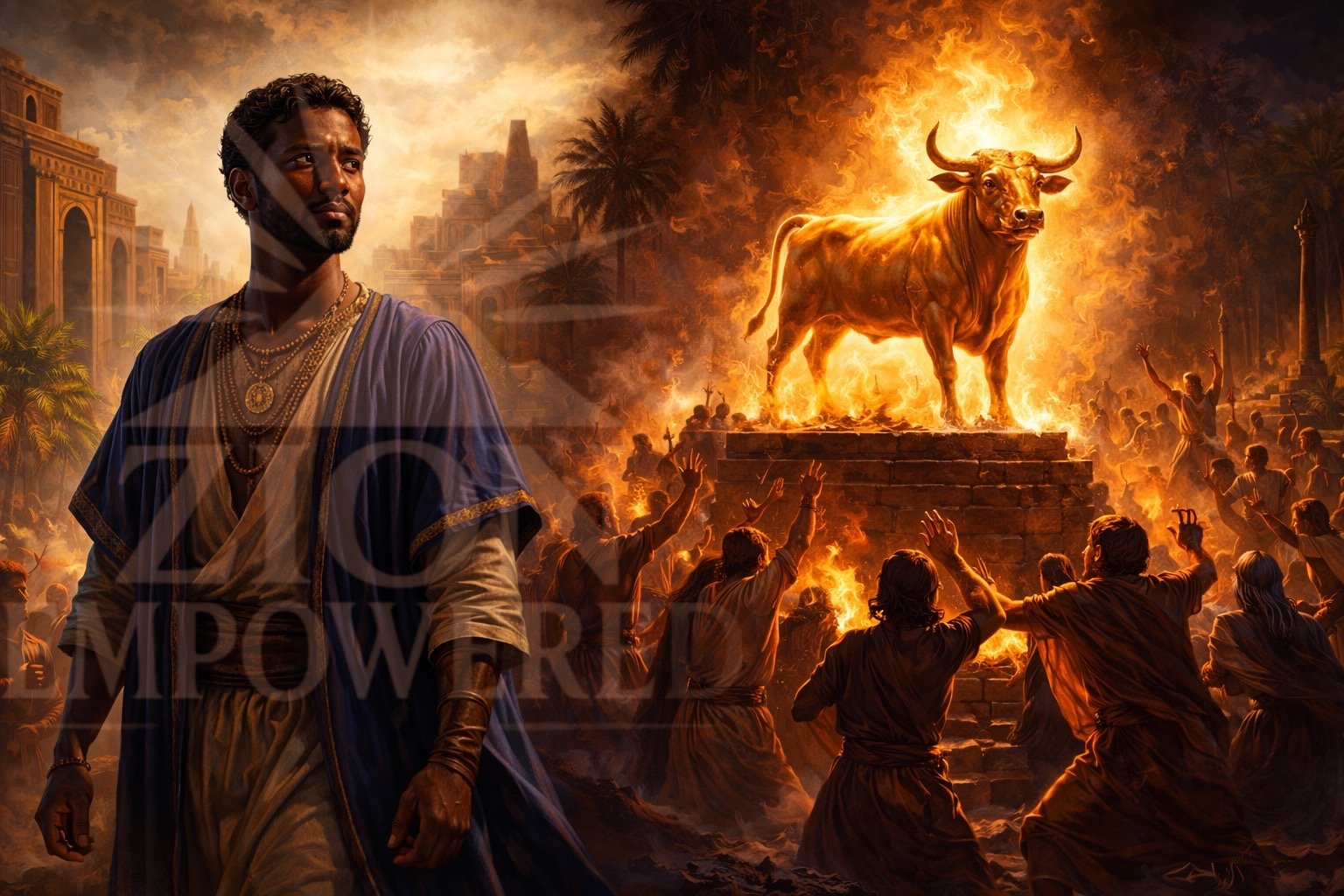
When the Table Tests the Temple
Preamble: Before Babylon touched Daniel’s surroundings,
Daniel had already settled his soul.
Before Moses moved the tent outside the camp,
Israel built a calf inside it.
Before glory returns,
appetite gets tested.
This is Lent.
Not just a season about what is on your plate,
but what is shaping your spirit.
What is training your cravings
when the world is loud,
when war fills the air,
and when working people grow weary of waiting.
Because sin rarely enters shouting.
It usually comes dressed as something practical.
Something manageable.
Something harmless.
Babylon offered food.
Israel offered gold.
Both asked the same question:
What do you reach for
when holiness gets costly
and waiting gets long?
Daniel answered with restraint.
Israel answered with substitution.
And that difference was not talent,
not location,
not luck.
It was formation.
Only a heart trained by God
can say no
before the mouth says yes.
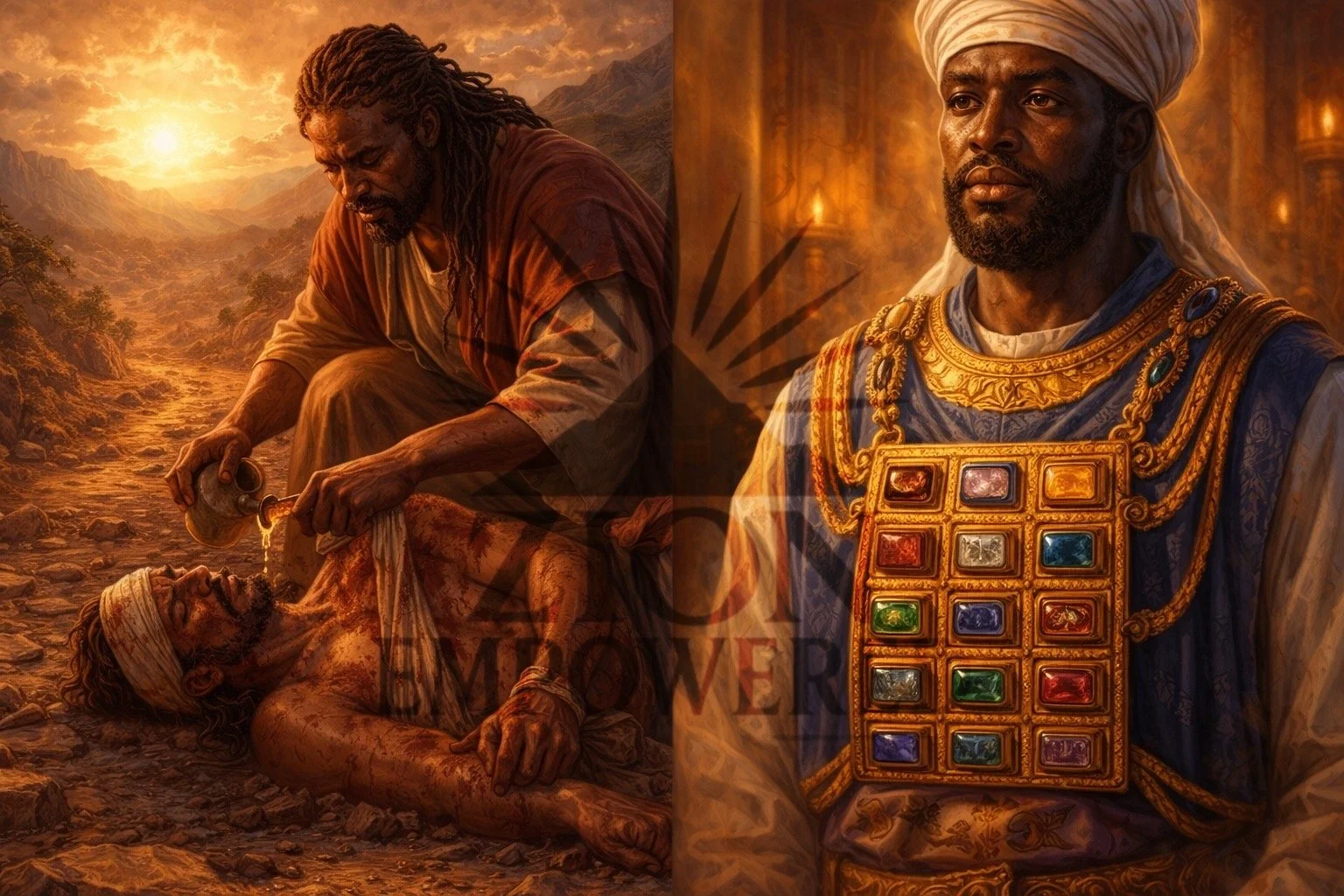
Judgment Over the Heart
Preamble: Before Jesus says Go and do likewise,
He asks, How do you read?
Before the Samaritan moves,
a lawyer interprets.
Formation before motion.
Understanding before action.
Judgment before mercy.
This is still Lent.
The season that interrogates motive before it blesses momentum.
The searching of the heart before the stretching of the hand.
Long before there was a Jericho road,
there was a breastplate.
Long before oil and wine on wounds,
there were stones engraved with names.
God told Aaron:
Carry the tribes over your heart.
Justice must rest where affection lives.
Discernment must sit where desire forms.
Judgment must never detach from love.
Because we have seen what happens
when religion wears gold but withholds mercy.
When symbols shine but compassion stalls.
When sacred garments move around suffering.
So heaven stitches justice to the chest.
And Jesus stitches mercy to the road.
Only a heart ordered by God
can cross a street without corrupting its calling.

Sanctuary Before Sending
Preamble: Before Jesus says Go, Scripture says become.
Formation before function. Presence before program.
A mountain is climbed before a mandate is spoken.
Worship rises before strategy forms.
Doubt is still breathing in the room.
This is Lent.
The season that examines motive before it blesses movement.
The searching of the heart before the sending of the feet.
Long before land or border or banner, God asked for a dwelling.
Not a monument to impress nations.
A sanctuary to host His Presence.
And the gift was not extracted but prompted.
Freedom, not force.
“Let them make Me a sanctuary, that I may dwell in their midst.”
Presence before authority.
Indwelling before influence.
Lent calls us back to that interior architecture.
To repentance deeper than performance.
To becoming before building.
Because we have seen what happens when authority outruns holiness.
When mission outruns formation.
When sacred language perfumes appetite.
So heaven reverses the order.
God inhabits before He authorizes.
He sanctifies before He sends.
And only a people who can carry Presence without corrupting it
are finally ready to hear Him say, Go.
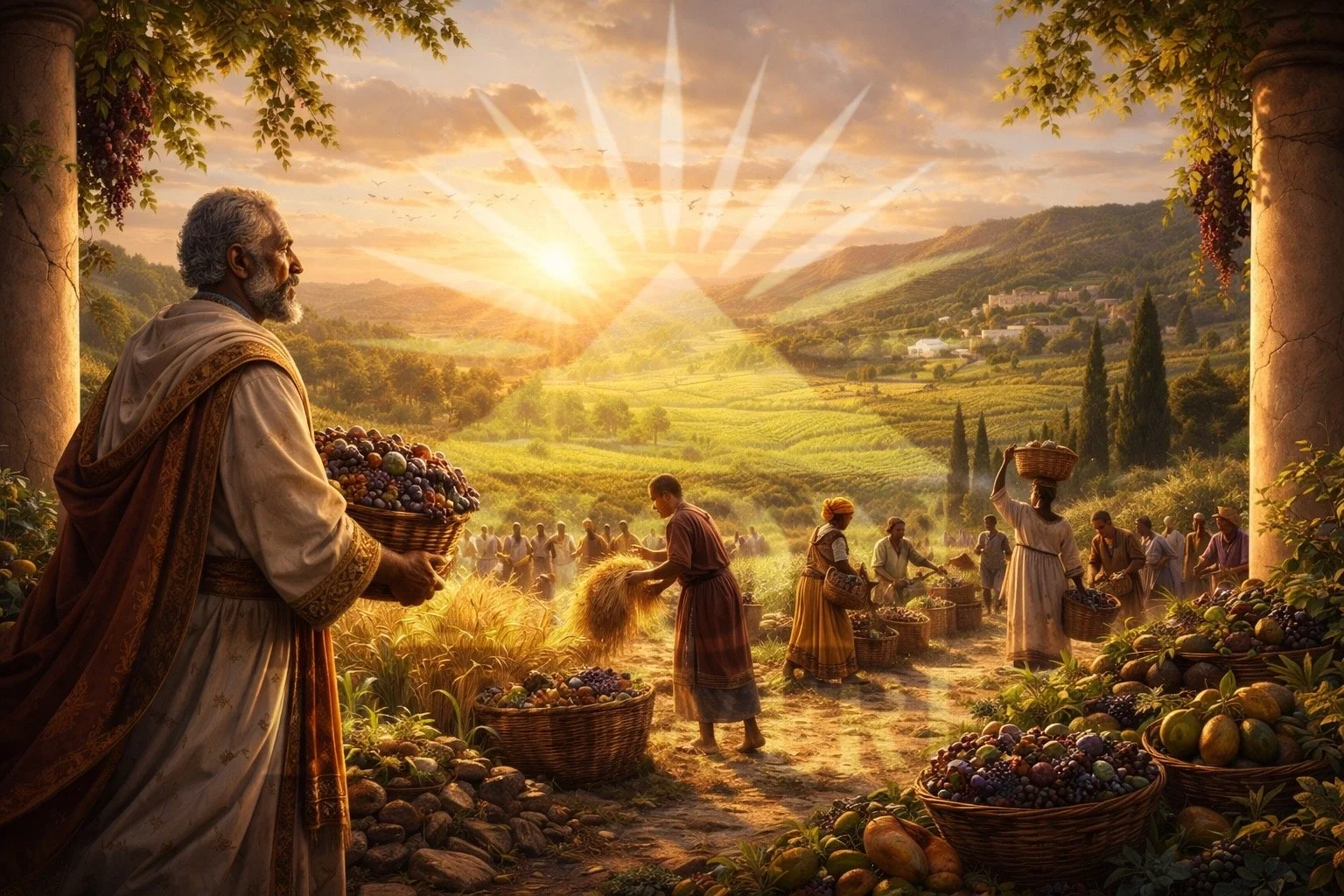
Justice Before Harvest
Preamble
Before Paul speaks of generous sowing, before he urges cheerful giving, before he promises increase
The Scripture speaks restraint.
Not overflow.
Not blessing.
Restraint.
Do not bend justice.
Do not distort truth.
Do not sell your integrity for influence.
Do not wound the stranger.
Before seed enters soil, God examines the ground.
Harvest does not begin with planting.
It begins with character.
A people acquainted with exploitation understands this without commentary.
We have watched wealth rise from fields
while those who tilled them were denied the fruit.
We have seen systems praise charity
while quietly resisting justice.
History has taught us:
you can decorate inequality,
but you cannot sanctify it.
Black endurance is not merely survival.
It is disciplined sowing in contested soil.
Valentine’s Day whispers a parallel truth, love without righteousness is performance, not covenant.
God will not multiply what contradicts His justice.
He will not bless what blinds the scales.
So Scripture interrupts us;
not to condemn harvest,
but to purify it.
Because the dream of abundance must rest on the architecture of truth.
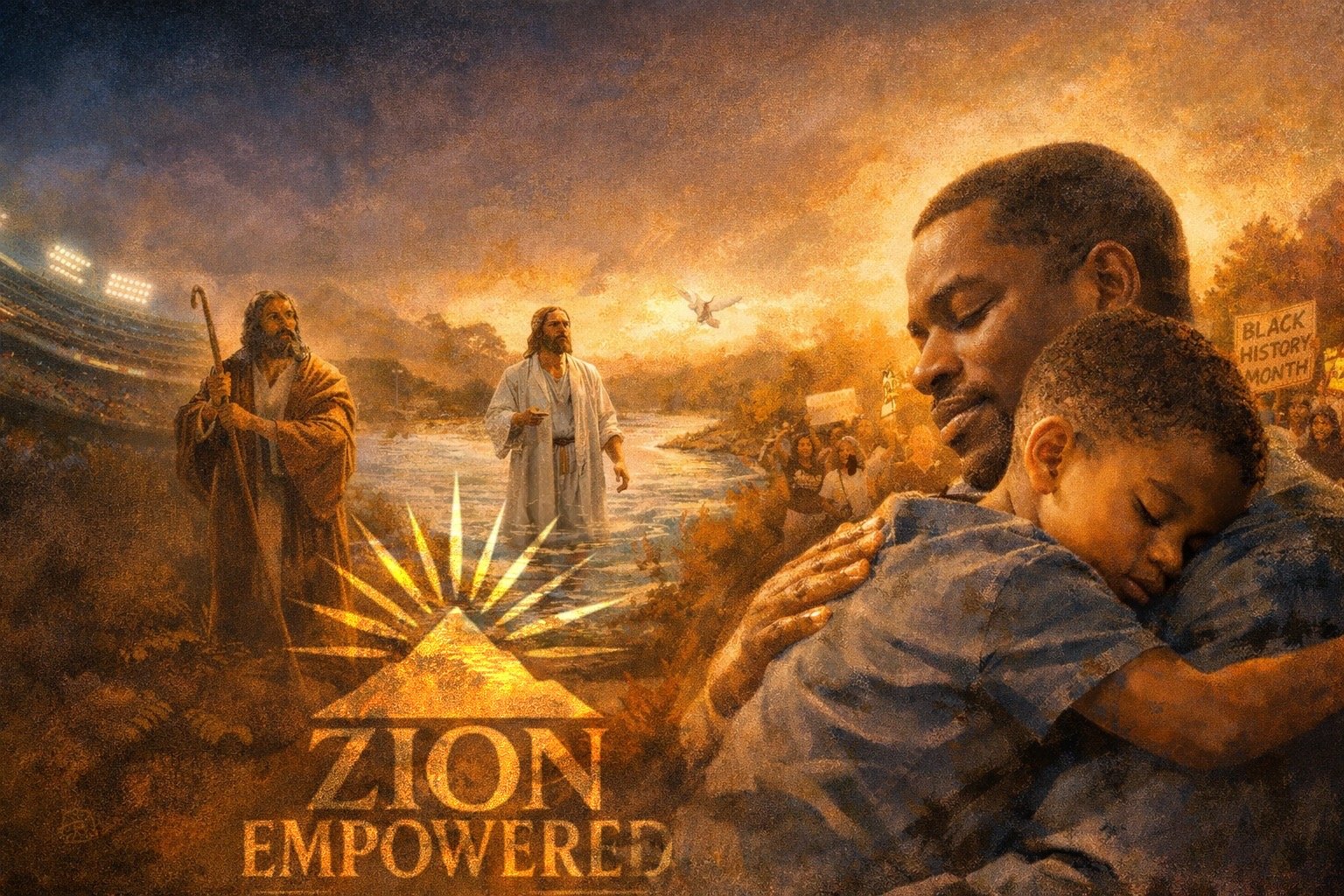
Beloved Before Burden
Preamble
Before Moses organizes leadership,
before Israel receives law,
before Jesus says a word in public or lays a hand on a wounded body,
God speaks belonging.
Not instruction.
Not correction.
Not expectation.
A voice.
A name.
A pleasure taken in him.
That matters on a weekend when the nation gathers to watch strength,
to measure worth by performance,
to crown heroes and discard them by Monday morning.
Because every spiritual collapse begins the same way:
when burden outruns identity,
when people are asked to carry weight
before they are told they matter.
And every people who have had to survive in this country know this lesson well.
We have been praised for our labor,
borrowed for our gifts,
celebrated for our endurance,
and rarely spared the cost of carrying it all.
So Scripture interrupts us here on purpose.
Before the work, God names the worker.
Before the demand, God claims the beloved.
Before the world decides what someone is useful for,
God decides who they are.
Faithful communities do not endure by staying busy.
They endure by remembering themselves,
by refusing to confuse survival with worth,
by insisting that identity is not earned under pressure.
Belovedness comes first.
Everything else must answer to that.
And when a people remember this,
they do not just make it through the season.
They learn how to stay whole while they do.

Formed on the Way
Preamble
Before Israel ever faces the sea,
before Paul ever speaks of maturity,
God introduces the same unsettling truth in two eras:
Freedom often comes faster than wisdom.
Unity is declared before agreement.
Formation happens on the road—
not after the conflict is settled.
Exodus shows a people who are free but not yet formed.
Ephesians shows a church that is one but not yet mature.
Both refuse the illusion that liberation produces instant stability.
Both assume tension will follow deliverance.
And both insist that in unstable times,
presence must come before precision,
and shared direction must matter more than speed.

Not a Hoof Left Behind
Preamble
Before Israel knows how it will worship,
before Paul knows how suffering will shape him,
God presses the same question in two eras:
Will you move forward without full clarity
or will you keep bargaining with what Egypt gets to keep?
Philippians names the inward struggle.
Exodus exposes the outward one.
Both refuse the lie that growth means “starting over.”
Both insist that progress, once gained, must be held.
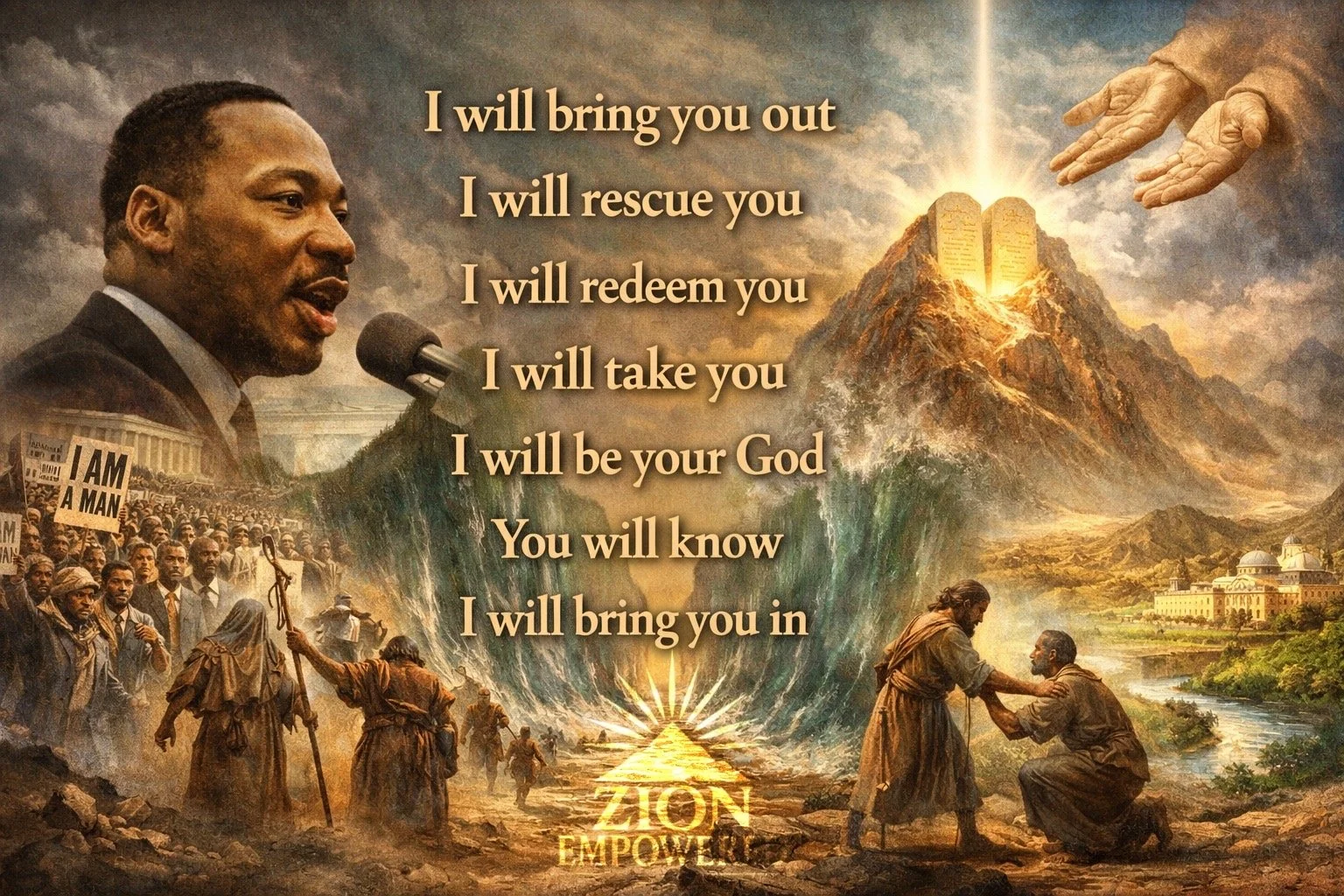
Seven Promises Before the Shaking
Preamble
Before anyone speaks right to God,
Scripture asks a quieter question:
Who gets to stand?
Some stand rehearsed.
Some stand bruised.
Some stand certain they’re right.
Some stand knowing they’re not.
In Exodus, God speaks seven promises to people too crushed to listen.
In the Gospel, one man prays loud, and goes unheard.
Another barely speaks, and goes home free.
This isn’t about prayer technique.
It’s about position.
It’s about truth.
It’s about who God listens to when power is in the room.
So today we listen for the God
who secures covenant before challenging empire,
who hears the low voice,
the honest voice,
the voice that doesn’t pretend.
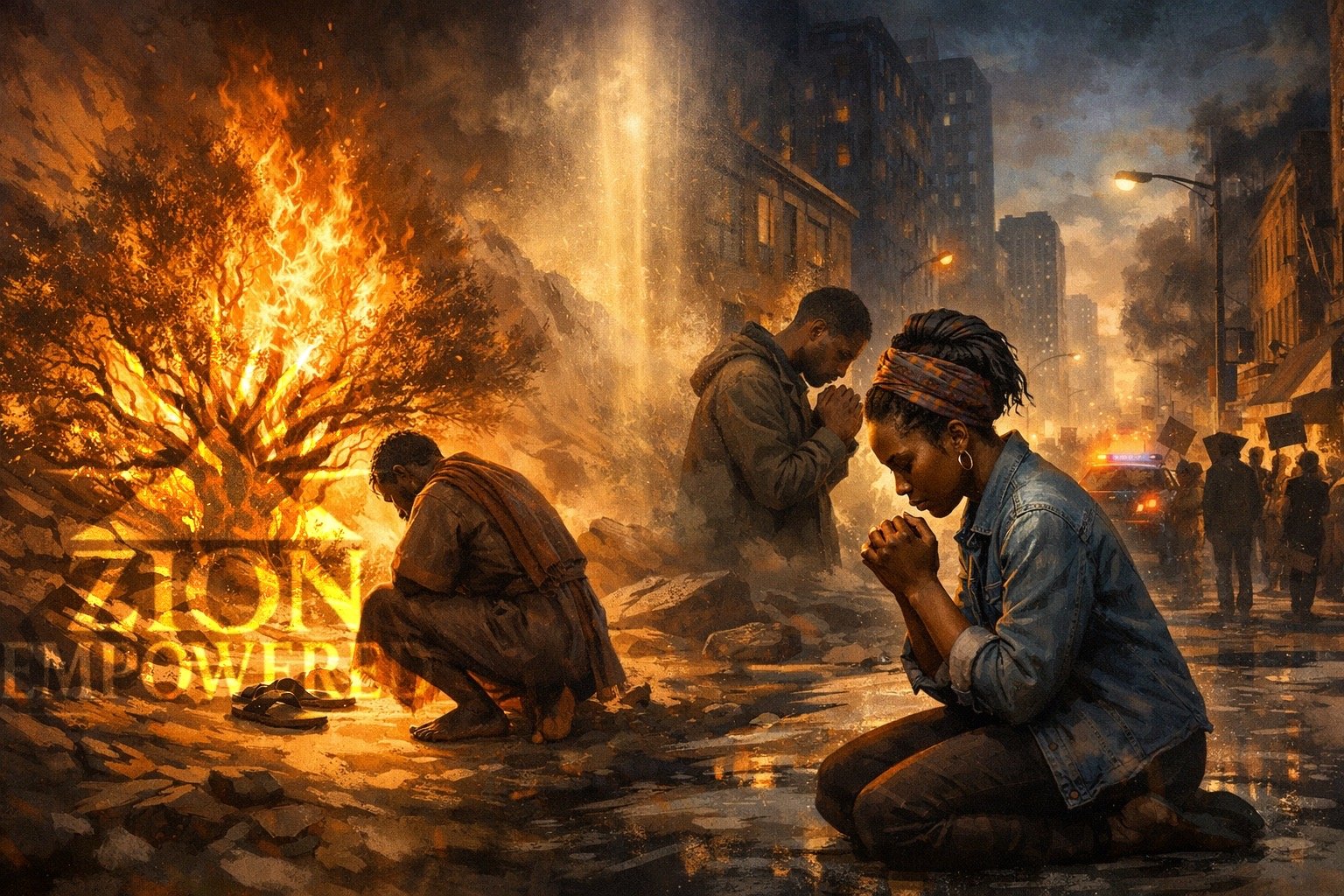
When the Cry Becomes a Name
Preamble
Before Israel ever learns how to pray, Israel cries because silence has become unbearable.
Before Jesus teaches the words of prayer, He exposes the danger of praying for the wrong reasons.
Matthew 6 does not offer technique.
Exodus 2–3 does not offer theory.
Both confront us with the same demanding truth:
Prayer begins when injustice is named aloud, and it matures when God’s Name interrupts our comfort.
This is not a lesson about sounding spiritual in visible places.
It is a lesson about what happens when suffering is pushed to the margins, when violence becomes familiar, when fear starts masquerading as normalcy.
Scripture refuses to bless that kind of quiet.
The Bible testifies that God listens first to the groan before the grammar,
to the cry before the creed.
God sees what power pretends not to notice.
God hears what communities are told to endure patiently.
And when the weight of injustice becomes too heavy for the soul to carry alone, God does not remain distant—God comes down.
This kind of prayer is not convenient.
It disturbs false peace.
It challenges shallow calls for order that ignore the wound.
It insists that reconciliation without truth is not reconciliation at all.
So when Jesus teaches us to pray, He is not inviting retreat from the world.
He is forming a people strong enough to stand within it,
to speak without hatred,
to forgive without surrendering justice,
to resist despair without denying pain,
and to believe that the Kingdom of God is not postponed by terror, violence, or fear.
Prayer, in this season, is not passive.
It is moral courage practiced on holy ground.
It is the long work of aligning heaven’s will with earth’s broken streets.
And as a certain preacher once reminded a weary nation,
history bends only when people are willing to pray, speak, and act
as though God is still listening,
and still coming down.
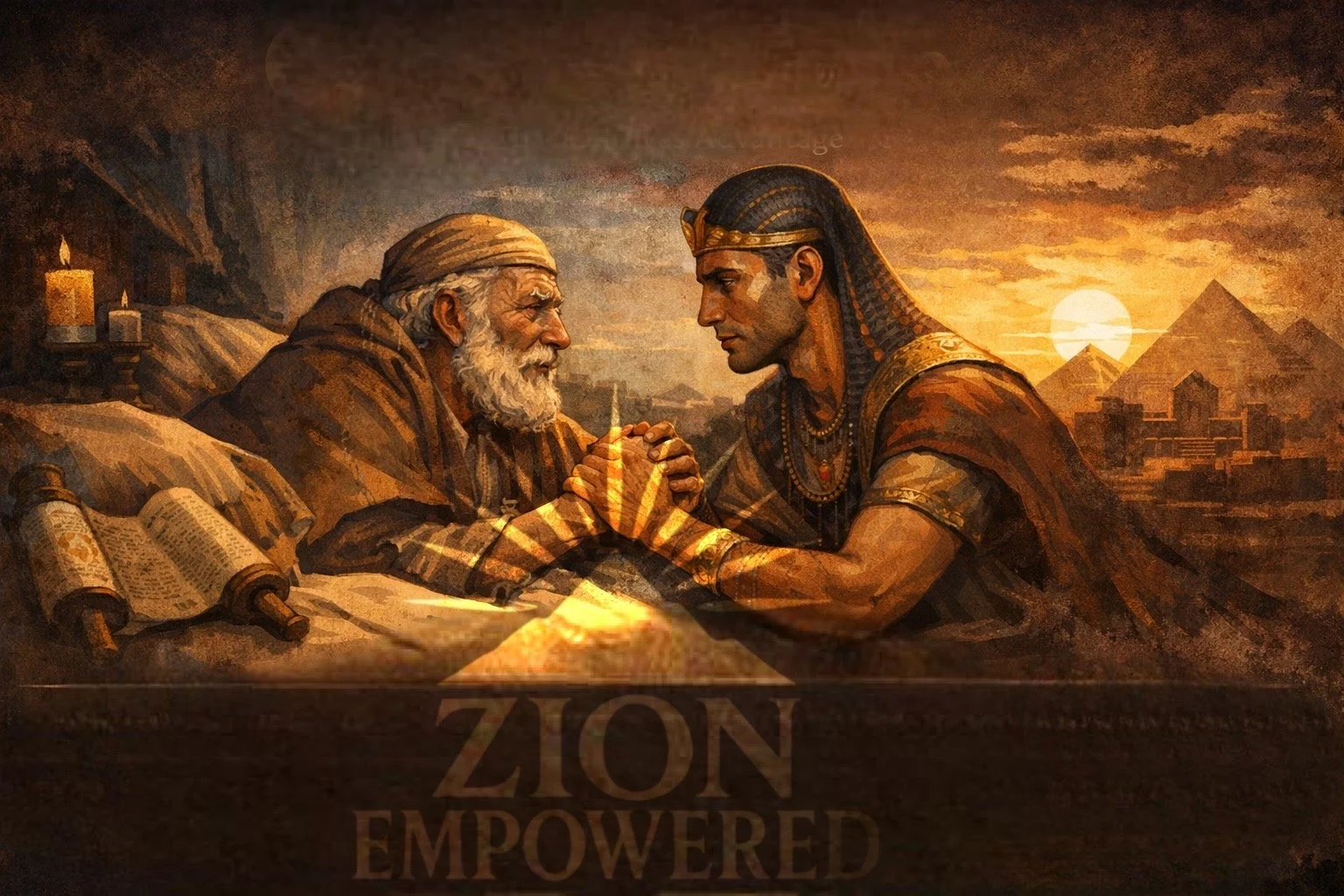
Chesed v’Emet: Covenant Ethics When the Ending Is Withheld
Preamble:
When God Teaches Ethics Inside Exile
We live in a world that treats power like a math problem you have to solve fast.
If you do not grab leverage, someone else will.
Speed passes for wisdom.
Force gets called necessity.
And fear, once it learns the right vocabulary, starts introducing itself as policy.
So everything moves quickly.
Words. Reactions. Consequences.
As if motion alone could count as thought.
But speed can move a system.
It cannot mature a people.
It only reveals what we were hoping not to examine.
Anxiety is very efficient.
It multiplies motion and divides memory.
The louder we get, the less we remember why we started moving.
And power, left unchecked, begins to mistake panic for principle.
That is not new. History has tried this equation before. It never balances.
Scripture interrupts the math.
Micah puts God on trial before the mountains, not to accuse Israel of failure, but of forgetting.
God’s first question is not “What did you do wrong?”
It is “What did I ever do to make you forget Me?”
Genesis takes us to a bedside in Egypt.
Jacob has no leverage left. No control over outcomes.
So he asks for one thing. Covenant loyalty when power is gone.
One scene is public. The other is quiet.
Both ask the same question.
Who governs you when you could act, but restraint would cost you?
Here is Scripture’s answer.
When God withholds the when, He clarifies the how.
Not with spectacle.
Not with domination.
But with justice that does not perform, mercy that does not advertise, and humility strong enough to say, “Just because I can does not mean I should.”
Exile is not just a place.
It is the moment when the future feels closed and faith is measured by restraint.
The question is not whether we can win.
History is full of winners who forgot themselves.
The question is whether, standing this close to power, we still remember who we are.
Abba in the Courtroom
Preamble:
Family is the first courtroom most of us ever stood in.
Some folks grew up with love like oxygen—just there.
Others grew up having to earn peace, perform worth, negotiate belonging.
So when Paul says, “You have not received a spirit that makes you fearful slaves,” he’s not doing religious poetry—he’s doing emancipation.
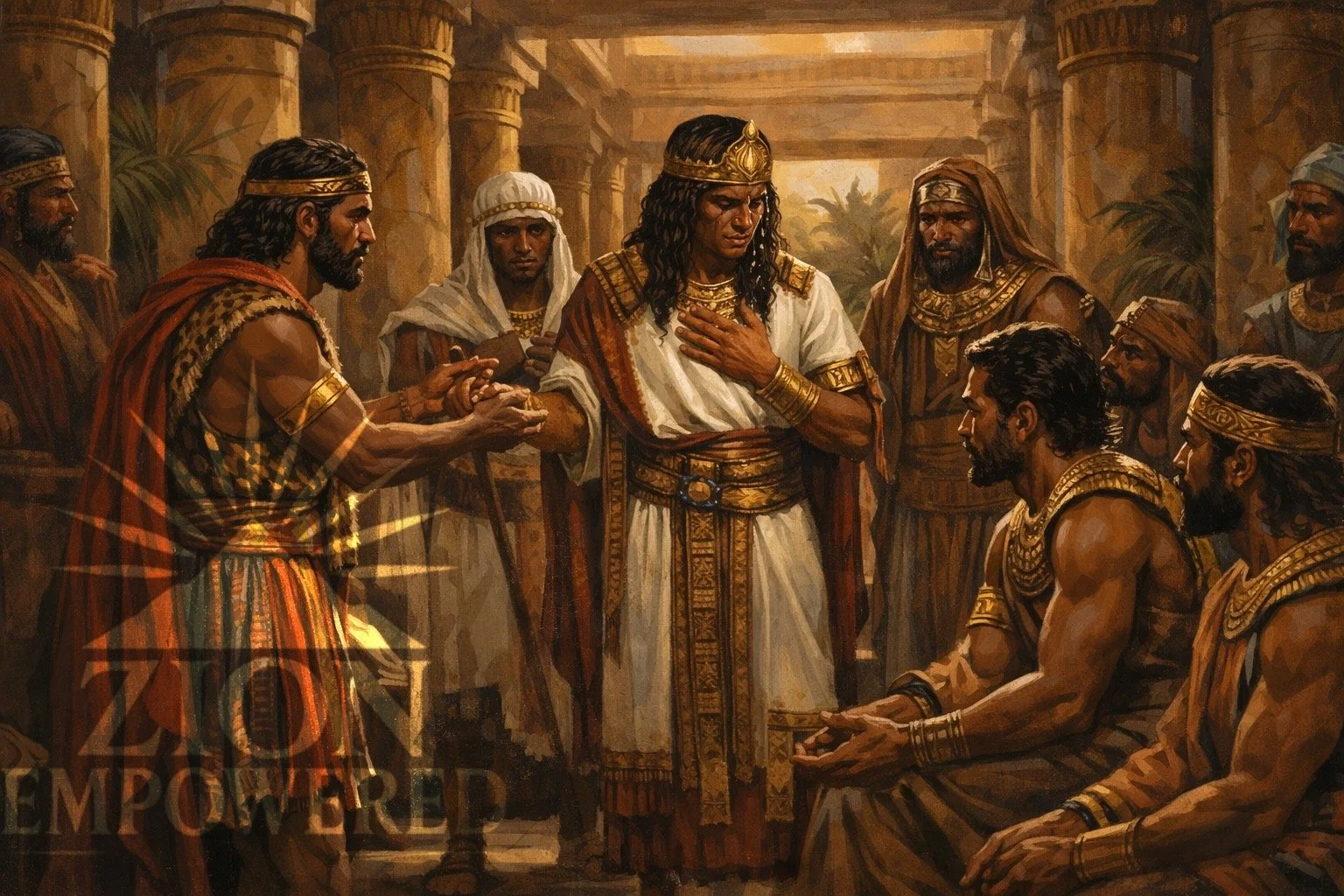
And when Judah says, “Let me remain as a slave instead of the lad,” he’s not doing drama—he’s rewriting the family story.
This Sunday is the last service of the year.
So we are not here to review resolutions.
We’re here to ask: Did the Spirit move us from slavery into sonship—or did we just decorate our chains?